

Whenever a new year starts, it’s natural to pause and reflect. For body shop owners and managers, this reflection often centers on a few familiar questions: What processes worked well? Where did we lose time or efficiency? And most importantly: how can we do better next year without burning out our teams?
One resolution consistently rises to the top across the collision repair industry: maintaining validated, accurate repair estimates while achieving faster cycle times and without adding unnecessary complexity. It’s a goal that sounds simple on paper but can feel difficult in practice, especially as body shops manage increasing vehicle complexity, staffing challenges, and growing customer expectations.
The good news? Improving speed and accuracy doesn’t have to mean overloading your team or reinventing your entire operation. With the right tools in place, body shops can streamline damage assessments, reduce supplements, and confidently scale their estimating process, setting the stage for a stronger, more profitable year ahead.
Setting Effective New Year’s Resolutions for Body Shops
Setting New Year’s resolutions for your collision repair body shop should start with a clear review of the past year’s performance from an operational and quality standpoint. This includes evaluating cycle times, comeback rates, estimating accuracy, insurer relations, parts delays, and customer satisfaction scores. Shop owners and managers should involve key team members: estimators, technicians, painters, and front-office staff, to identify recurring bottlenecks and gaps in procedures, always keeping an eye on customer experience. Using updated data from management systems and carriers KPIs helps ensure resolutions are grounded in reality rather than assumptions. From a collision repair perspective, strong resolutions focus on improving repair quality, consistency, and efficiency while staying compliant with OEM procedures and safety standards.
Once priorities are identified, resolutions should be specific, measurable, and tied directly to your shop processes. For example, instead of a broad goal like “improve efficiency,” you might commit to reducing cycle time by refining operations at vehicle intake. Training and certification goals for your teams, such as OEM training, welding certifications, or ADAS calibration competency, are also critical resolutions that directly impact repair quality and liability. And remember, successful resolutions require accountability: assigning ownership, setting timely check-ins, and adjusting processes as needed.
Speed vs. Accuracy: A Smarter Approach to Damage Assessments
Traditionally, faster cycle times have come at a cost. Rushed estimates can miss hidden damage, leading to supplements, delays, and frustrated customers. On the other hand, highly detailed assessments often take significant time and rely heavily on the experience of senior staff, creating bottlenecks, burdened team members and limiting scalability, not to mention impacting on the customer experience when stakeholders are still expecting a finalized repair estimate.
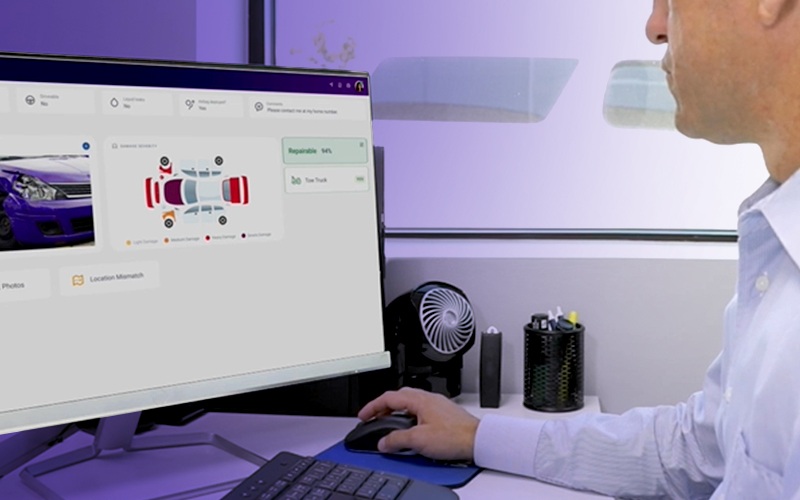
As vehicles become more complex, with advanced materials, sensors, and electronics, this balancing act becomes even harder. Body shops need a way to standardize steps while still moving quickly and providing top notch customer service and being efficient at vehicle intake, regardless of who is performing the inspection. With mobile inspections and guided workflows, shops can begin generating accurate pre-estimates in just minutes, saving time upfront and setting clearer expectations with customers and insurers from the very beginning of the repair journey.
This is where innovative estimating solutions come into play. With the evolvement of technology, it’s overwhelming how much the industry has changed in the way customers and employees operate their daily tasks, and owners need to step up and realize the old ways of doing things have changed. Rather than adding layers of complexity, modern estimating tools are designed to simplify the process, making it faster, clearer, and easier to replicate across your entire team. This also serves as the perfect tool to onboard and train new members, helping them in their learning process from basic skills to handling more complex cases.
One of the biggest advantages of modern estimating solutions is how well they support onboarding and training. Instead of relying solely on tribal knowledge, shops can give new hires tools that guide them through best practices from day one. This means:
- More consistent estimates across your team
- Less dependency on a single “go-to” estimator
- Greater confidence as your business grows
In short, you gain the ability to scale your operation without compromising on quality or accuracy.
Key Features That Drive Efficiency and Confidence
Innovative tech-driven solutions like Qapter Estimating are empowering body shops owners and staff by combining advanced technology with practical, shop-friendly workflows, helping with key benefits such as:
- 3D Graphics: Interactive 3D visuals allow estimators to quickly identify damaged areas and understand how components relate to one another. This visual clarity helps reduce missed operations and improves communication across the shop.
- Inside-Out Methodology: Estimators can uncover hidden damage more consistently by viewing color-coded parts connections. This methodology encourages thorough inspections and helps break down the repair steps.
- Build Sheet Data: Access to accurate part data ensures that estimates are tailored to the exact vehicle configuration. This level of accuracy is critical for modern vehicles and helps eliminate guesswork when selecting parts and operations.
- Labor Reports: Detailed labor reports provide transparency and consistency, making it easier to plan tasks per person based on times. They also serve as valuable training tools for newer staff members.
Looking Ahead with Clarity and Confidence
As you set goals for the year ahead, consider where clarity and efficiency matter most in your operation. Faster, more accurate estimates improve cycle times, enhance customer trust, reduce friction with insurers, and create a smoother experience for your entire team. With the right tools in place, you can start the year focused, confident, and ready to move forward.